


Dump Trailer Towing Guide What Tow Vehicle, Hitch, and Weight Setup You Actually Need
t
tj@civsav.com
© 2026 Civilized Savage
Based in USA
tj@civsav.com
The most common mistake that first-time dump trailer buyers make has nothing to do with the trailer itself. It happens before they ever load the first yard of material. They buy the right trailer, get it home, back up the truck, hook up the ball, and then realize the combination they just created is either illegal on public roads, mechanically unsafe, or both.
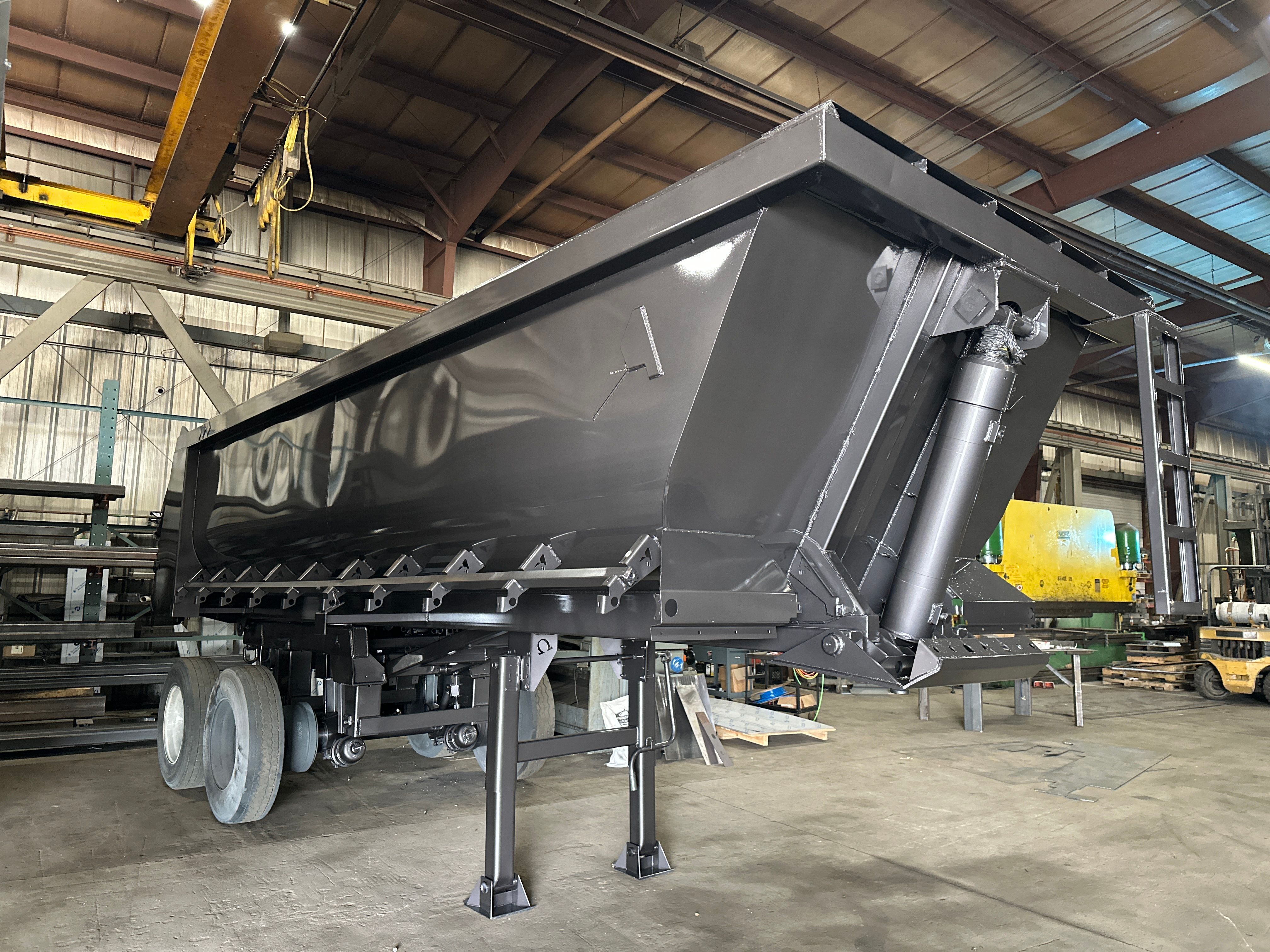
Dump trailers are heavy. A fully loaded heavy-duty dump trailer can weigh 20,000 pounds or more. The hitch connecting that load to your truck, the truck's own towing capacity, the tongue weight on the receiver, and the braking capability of the entire combination all have to work together within defined limits. None of those limits are suggestions. They are engineering specifications and regulatory requirements that exist because the consequences of exceeding them include equipment failure, loss of vehicle control, and accidents that injure people.
This guide covers what you need to know about tow vehicle capacity, hitch class and rating, tongue weight and weight distribution, trailer brakes, and the practical setup that keeps your dump trailer operation legal, safe, and productive.
Understanding the Numbers: GVWR, GCVWR, and Tow Rating
Three numbers govern whether your tow vehicle and dump trailer combination is within spec. Understanding what each one means prevents the confusion that leads to operating equipment outside its rated limits.
GVWR: Gross Vehicle Weight Rating
The GVWR of your dump trailer is the maximum weight the trailer is designed to carry, including the trailer's own unloaded weight. A dump trailer with a 14,000-pound GVWR and an unloaded weight of 4,000 pounds has a payload capacity of 10,000 pounds. Loading more than 10,000 pounds into that trailer puts the trailer beyond its GVWR, which stresses the frame, axles, tires, and suspension beyond their design limits and creates both a safety risk and a warranty issue.
ALKO Manufacturing builds its trailers to rated GVWR, and operating consistently within that rating is what produces the service life the trailer is designed for. The relationship between payload capacity and GVWR, and how exceeding rated capacity affects both trailer performance and longevity, is covered in the article on dump trailer payload capacity and how it affects hauling productivity and costs.
GCVWR: Gross Combined Vehicle Weight Rating
The GCVWR is the maximum combined weight of the tow vehicle and the trailer together. Your truck has a GCVWR listed in its owner's manual and on the door jamb placard. The combined weight of the truck plus the loaded trailer cannot exceed this number. If your truck has a GCVWR of 22,000 pounds and the truck itself weighs 8,000 pounds, the maximum loaded trailer weight is 14,000 pounds regardless of what the trailer's own GVWR allows.
This is where many operators get into trouble. They verify that the trailer's GVWR is within the truck's published tow rating but do not check whether the combined weight of truck and loaded trailer is within the GCVWR. These are different numbers and both have to be satisfied simultaneously.
Tow Rating
The tow rating on your truck is the maximum weight it can tow, listed by the manufacturer for specific configurations including engine, transmission, axle ratio, and whether the truck is equipped with the tow package. Trucks with the same model name but different configurations can have substantially different tow ratings. A half-ton truck without a tow package may be rated significantly lower than the same truck with the maximum tow package and the right axle ratio.
The tow rating in the manufacturer's data is the number to use, not the number a salesperson quotes or a forum post suggests. It is determined through engineering analysis of the drivetrain, cooling capacity, braking capability, and structural limits of the specific truck configuration.
Hitch Class: The Physical Connection Between Truck and Trailer
The hitch receiver and ball mount connecting your truck to the trailer has a rated capacity that must be matched to the tongue weight the loaded trailer creates. Using an undersized hitch for the load being towed is a failure point that can separate the trailer from the tow vehicle.
Hitch classes are defined by receiver tube size and rated capacity.
Class III hitches use a two-inch receiver tube and are typically rated for 6,000 to 8,000 pounds gross trailer weight and 600 to 800 pounds tongue weight. Class III is the most common hitch class on light-duty and half-ton trucks. For lighter dump trailers used in landscaping and light hauling applications, Class III may be adequate. For heavier dump trailers in contractor and construction applications, Class III is typically insufficient.
Class IV hitches use a two-inch receiver tube with heavier wall construction and are rated for up to 10,000 pounds gross trailer weight and up to 1,000 pounds tongue weight. Class IV is appropriate for heavier light-duty applications but still insufficient for the full-size dump trailer applications that contractors and haulers run.
Class V hitches use a two-and-a-half-inch receiver tube and are rated for up to 18,000 to 20,000 pounds gross trailer weight and up to 1,800 to 2,000 pounds tongue weight in commercial configurations. Class V is the appropriate hitch class for heavy-duty dump trailer applications with three-quarter-ton and one-ton trucks.
Commercial fifth wheel and gooseneck hitches provide capacity well beyond the receiver hitch classes and are used for the heaviest dump trailer applications where a receiver hitch configuration is insufficient for the combined weight.
The ball size must match the trailer's coupler. Common ball sizes are 1-7/8 inch, 2 inch, and 2-5/16 inch. Heavy-duty dump trailers typically use a 2-5/16-inch ball coupler because the larger ball provides more contact area and is rated for higher tongue weights than the smaller sizes. Using a 2-inch ball in a 2-5/16-inch coupler creates a loose connection that allows the trailer to bounce and rattle on the ball rather than maintaining the stable connection the coupler was designed for.
Tongue Weight: The Most Misunderstood Number in Towing
Tongue weight is the downward force the loaded trailer exerts on the hitch ball. It is determined by how the load is distributed in the trailer. Too little tongue weight makes the trailer unstable. Too much tongue weight overloads the hitch and the rear axle of the tow vehicle.
The general guideline for tongue weight is that it should be between 10 and 15 percent of the gross trailer weight for most towing applications. A trailer with 10,000 pounds of gross weight should have between 1,000 and 1,500 pounds of tongue weight. Less than 10 percent produces trailer sway. More than 15 percent overloads the hitch and compresses the rear of the tow vehicle in ways that can reduce front axle traction and steering response.
For dump trailers, the tongue weight is influenced by where material sits in the trailer bed after loading. Material that settles toward the front of the trailer increases tongue weight. Material distributed evenly across the bed produces a balanced tongue weight closer to the 10 to 15 percent guideline.
Weight distribution hitches are available for receiver hitch applications where tongue weight is excessive relative to the tow vehicle's rear axle capacity. A weight distribution system spreads the tongue weight load across the tow vehicle's front and rear axles rather than concentrating it on the rear axle, which improves vehicle control and reduces rear axle stress.
Trailer Brakes: Required, Not Optional
Any dump trailer with a GVWR above a defined threshold, typically 3,000 pounds in most states, is required to have a working trailer brake system. Heavy-duty dump trailers with GVWRs of 10,000 pounds and above require trailer brakes without exception, and the braking system must be functional and properly adjusted before the combination operates on public roads.
Electric trailer brakes are the most common braking system on dump trailers. The brakes are activated by a brake controller mounted in the tow vehicle cab that detects deceleration and sends a proportional signal to the trailer brakes. The brake controller must be compatible with the trailer's electric brake system and properly adjusted for the trailer's weight to provide effective synchronized braking.
A tow vehicle without a brake controller cannot legally or safely tow a trailer that requires trailer brakes. Installing a brake controller is a prerequisite for towing heavy dump trailers, not an optional upgrade.
Trailer brake adjustment affects both braking performance and brake wear. Underadjusted brakes that apply too little force allow the trailer to push the tow vehicle during braking. Overadjusted brakes that apply too much force can lock the trailer wheels during braking, which reduces control. Most brake controllers have a gain adjustment that the operator sets based on the loaded weight of the trailer being towed.
The maintenance requirements for the complete trailer system, including brake adjustment and the other service items that keep a dump trailer in safe operating condition, are covered in the article on dump trailer maintenance guide for contractors and haulers.
Tire and Axle Load Ratings
Every tire on the dump trailer has a load rating that defines the maximum weight each tire can safely carry. The combined load rating of all trailer tires must exceed the trailer's GVWR. Operating with tires that are underinflated or overloaded creates heat buildup that can lead to tire failure at highway speed.
Tire pressure for dump trailer tires should be checked before every use and set to the pressure specified on the tire sidewall for the load being carried. Dump trailers that sit between uses may lose pressure from temperature changes and slow leaks that reduce tire pressure below the safe operating level.
Axle ratings work similarly. Each axle has a rated capacity, and the combined axle ratings must meet or exceed the trailer's GVWR. ALKO Manufacturing sizes the axle configuration of each trailer model to match its GVWR, which means operating within the trailer's payload capacity automatically keeps axle loads within their rated limits.
Practical Setup Before Every Towing Session
A pre-tow inspection that takes five minutes prevents the problems that happen on the road when something that was not checked at the start of the day fails during operation.
Verify the coupler is fully latched on the ball with the latch secured and the safety pin in place. A coupler that is not fully latched can separate from the ball during towing, which is a catastrophic failure with severe consequences.
Connect the safety chains with enough slack to allow turns without binding but without so much slack that the chains drag on the road if the trailer were to separate. Cross the chains under the coupler so they provide a cradle that catches the trailer tongue if separation occurs.
Plug in the trailer wiring harness and verify that brake lights, turn signals, and running lights are all functioning. A trailer without functioning lights is a safety hazard and a traffic violation.
If the trailer has electric brakes, verify that the brake controller is responding correctly by performing a slow test stop in a safe area before reaching road speed.
Check tire pressures and visually inspect all four tires for damage or abnormal wear before each use.
Choosing the Right Trailer for Your Tow Vehicle
The trailer selection and the tow vehicle decision interact, and making them independently can produce a combination that does not work legally or safely. If you know what tow vehicle you are using, the trailer selection should stay within that vehicle's rated combination limits. If you are selecting both simultaneously, the trailer capacity you need drives the tow vehicle specification required to match it.
ALKO Manufacturing builds dump trailers across a range of GVWR specifications to serve the full range of contractor and hauler applications. Understanding which trailer GVWR your operation requires and what tow vehicle is needed to match it is the starting point for a combination that works correctly.
The complete guide to choosing the right ALKO dump trailer for your specific business requirements, including the operational factors that determine which trailer configuration and capacity is the right match, is covered in the article on choosing the right dump trailer for your business needs.
Contact ALKO Manufacturing through alkodumptrailers.com to discuss trailer specifications, towing requirements, and which trailer model fits your specific tow vehicle and hauling application.