


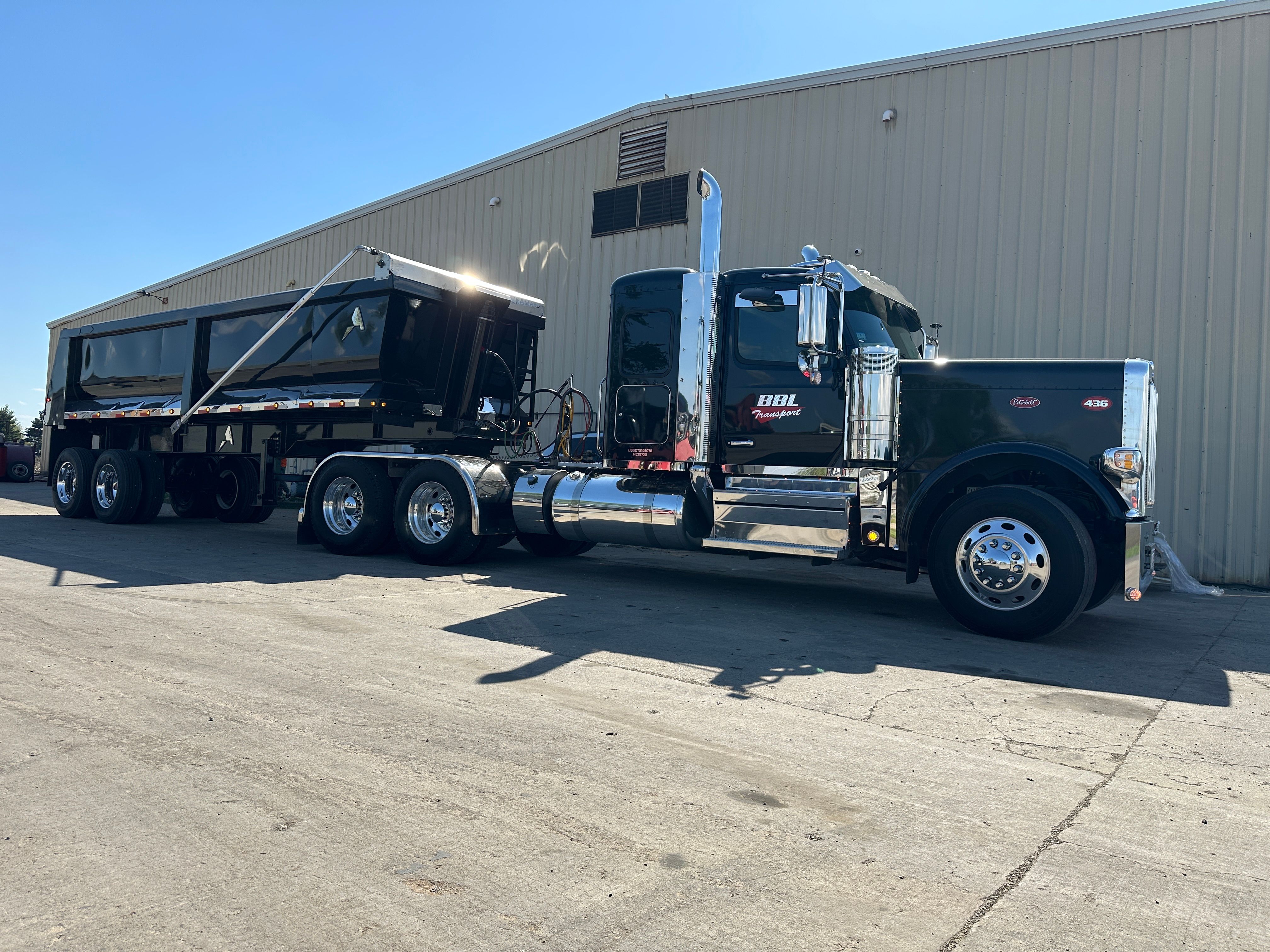
End Dump vs Quarter Frame vs Full Frame Which Dump Trailer Configuration Is Right for Your Operation
t
tj@civsav.com
© 2026 Civilized Savage
Based in USA
tj@civsav.com
Walk into any construction supply yard, quarry, or excavation operation and you will find dump trailers. Walk around long enough and you will notice they are not all built the same way. The way the dump mechanism is engineered, where the pivot point sits, how the frame is constructed, and how the load releases all differ significantly between trailer types. Those differences are not cosmetic. They determine which materials the trailer handles efficiently, which job site conditions it can navigate, and what kind of daily workflow it supports.
ALKO builds end dump trailers, quarter frame trailers, and full frame trailers because different operations genuinely need different configurations. Buying the wrong trailer type for the work is one of the most expensive mistakes haulers make, not because the trailer fails, but because it was never optimized for what the job demands. This article breaks down how each configuration works, where each one excels, and which situations genuinely call for one over another.
How Each Configuration Works The Engineering Behind the Dump
Before comparing applications, understanding the mechanical difference between configurations helps buyers evaluate which design fits their specific operation.
End Dump Trailers
An end dump trailer dumps by raising the trailer body at the rear pivot point, allowing material to slide out the back. The hydraulic cylinder raises the front of the body, the tailgate opens, and gravity does the rest. End dumps are the most widely used configuration in construction and excavation work because they are straightforward to operate, dump quickly, and handle a wide range of materials.
The key operational characteristic of an end dump is height during dumping. When the body raises, the front of the trailer lifts significantly. This requires overhead clearance at the dump site. For open sites like quarries, stockpile areas, and landfills with adequate clearance, this is not a concern. For sites with overhead obstructions, it requires attention before the trailer is spotted for dumping.
Quarter Frame Trailers
A quarter frame trailer uses a pivot point positioned roughly at the quarter point of the trailer length from the rear rather than at the very back. This design raises the rear of the trailer body while keeping the front relatively level, producing a shorter dump angle and a lower front lift height than a traditional end dump.
The practical result of this geometry is a more controlled, lower-profile dump that spreads material in a slightly different pattern than a full end dump raise. Quarter frame trailers are well suited to applications where material needs to be placed with more precision, where site conditions make the high front lift of an end dump problematic, and where road stability during transport is a consideration for operators who value the lower center of gravity the quarter frame provides.
Full Frame Trailers
A full frame trailer is built on a continuous structural frame that runs the full length of the trailer rather than relying on the dump body itself as part of the structural system. This construction approach produces a heavier, more robust trailer that distributes load stress through the frame rather than concentrating it at the body mounting points.
Full frame construction is the choice for the heaviest hauling applications, aggregate and rock hauling at high volumes, demolition debris with irregular and impact-heavy loads, and operations where the trailer will be working at or near maximum capacity consistently. The additional structural investment produces a trailer that can absorb the abuse of demanding applications without the fatigue failure that less robust designs eventually develop in high-cycle, heavy-duty use.
End Dump Trailers The Workhorse Configuration
End dump trailers cover the majority of construction, landscaping, and material hauling applications that contractors and owner-operators encounter daily. The configuration is familiar, parts and service support are widely available, and the dump mechanism is simple and reliable.
For contractors hauling topsoil, fill dirt, gravel, crushed stone, mulch, and construction debris, the end dump handles all of it without requiring specialized knowledge or unusual operating procedures. Load it, drive to the dump site, open the tailgate, raise the body, and the material comes out. The speed and simplicity of this operation is what makes end dumps the default choice for high-cycle operations where time at the dump site directly affects daily productivity.
End dumps also excel in situations where accurate placement of material matters less than delivery speed. Stockpile operations, quarry supply runs, and landfill operations where material is being deposited in bulk rather than placed precisely are ideal end dump applications. The trailer dumps, the body comes down, the gate closes, and the truck is back on the road in minutes.
Choosing the right end dump size for the operation is as important as choosing the configuration. Undersized trailers require more runs per day to move the same material volume. Oversized trailers increase tare weight, reduce payload efficiency, and may exceed legal weight limits on routes that require it. The full analysis of how to match dump trailer size to hauling requirements is covered in the article on what size dump trailer you actually need for your operation. That sizing decision should happen before the configuration decision, because the right size in the right configuration produces the most efficient trailer for the specific operation.
Quarter Frame Trailers Precision and Stability for Demanding Applications
Quarter frame trailers occupy a specific niche in the dump trailer market that is not always well understood by buyers who are primarily familiar with end dumps. The configuration was developed to address specific limitations of full end dump geometry in applications where precise material placement, stable transport on public roads, or site overhead constraints make the alternative preferable.
The lower dump profile of a quarter frame trailer produces a flatter, more controlled material release than an end dump. For applications where material needs to be deposited in a specific location with minimal spread beyond the target zone, this controlled dump is an operational advantage. Road base placement for grading work, aggregate delivery to a specific bin or conveyor feed, and fill placement in confined excavations all benefit from the quarter frame's more precise deposit.
Road stability during transport is another quarter frame advantage on operations with significant road mileage between loading and dump sites. The lower center of gravity during transport, compared to a body style that sits higher when loaded, affects how the trailer handles on curves and in crosswind conditions. For owner-operators running high mileage routes where road behavior over the full shift matters, this handling characteristic is worth considering alongside the site performance factors.
The quarter frame's versatility across a range of applications without the full structural overhead of a full frame design makes it a practical middle ground for operations that need more stability and precision than a standard end dump but do not require the maximum capacity and structural robustness of full frame construction.
Full Frame Trailers Maximum Capacity and Long-Term Durability
Full frame construction is for operations where the trailer is going to be worked hard, loaded heavy, and run continuously through a long service life without tolerance for structural compromise. The additional weight of full frame construction is an investment in durability that pays back in extended service life, lower maintenance frequency, and the confidence that the trailer can handle maximum payload applications without the stress that accumulates in less robust designs over time.
Aggregate and quarry operations that load trailers to their maximum rated capacity on every run benefit most from full frame construction. Rock and crushed stone loads are dense, high-weight materials where consistently running at capacity is the operating model rather than the exception. The impact of loading at a quarry, where material is often dropped from height into the trailer body, adds dynamic stress on top of the static load stress that the frame must handle continuously.
Demolition debris hauling is another full frame application because of the irregular, high-impact nature of the loads. Concrete chunks, steel, mixed masonry, and structural debris loads are not smooth, gradual fills. They are drops of irregular, high-density material that puts shock loading into the frame and body that well-engineered full frame construction handles without deformation.
For contractors who run their trailers at high capacity consistently and plan to keep them in service for many years, the total cost of ownership argument for full frame construction is strong. The initial purchase premium for full frame over lighter designs is recovered through lower maintenance costs, fewer structural repairs, and longer trailer life that delays the replacement cycle.
The steel versus material choice interacts with the frame design choice in ways that affect total trailer weight and payload efficiency. The detailed comparison of steel versus aluminum dump trailers and which material is right for different operations covers how material choice compounds with frame design to determine the trailer's total weight, payload capacity, and long-term durability profile.
How Operating Conditions Should Drive Configuration Selection
Beyond the trailer characteristics, the operating environment where the trailer will work most of the time should heavily influence configuration selection. Contractors who work across diverse site types and material types need a different answer than operators who run dedicated routes with consistent loading and dump conditions.
Site access and overhead clearance matter most for end dump selection. A job site with overhead power lines, structural overhangs, or limited clearance above the dump zone creates constraints that end dump height during dumping must be evaluated against. Quarter frame trailers with their lower front lift angle are better suited to constrained overhead environments.
Road conditions and route profile affect the stability advantages of quarter frame and full frame designs. Long highway runs where trailer handling at speed matters, or routes through urban areas with tight turns and low bridges, create conditions where trailer geometry during transport matters alongside dump site performance.
Material type and density drive the decision toward full frame construction for heavy aggregate and demolition work, and allow lighter frame designs for topsoil, mulch, and light fill materials where density is lower and the full structural investment of a heavy frame is not required to handle the load safely.
Dump site conditions including whether the trailer dumps on a level surface or on sloped ground, whether the site has soft ground that could shift under the trailer during dumping, and whether material needs to be placed precisely or simply deposited in bulk all factor into which dump geometry produces the best operational result.
These same operating condition factors affect which ALKO trailer model within each configuration best fits a specific operation. The detailed guide to choosing the right dump trailer for your business needs covers the decision framework across all the variables that differentiate one trailer from another beyond just the frame configuration.
Custom Build When Standard Configurations Do Not Fit
Not every hauling operation fits cleanly into a standard configuration. ALKO's custom build capability exists specifically for situations where the standard end dump, quarter frame, or full frame designs need to be modified to fit an unusual application, a specific payload requirement, a non-standard truck connection, or a specialized material handling situation.
Custom builds allow contractors to specify body length and width outside standard production dimensions, tailgate configurations for specific material types, specialized hydraulic setups for non-standard dump angles, and structural modifications for unusual load profiles. The custom build conversation starts with what the trailer needs to do and works backward to the specifications that make it do that correctly.
For contractors who have evaluated standard configurations and found that none of them fully fits the operation's requirements, the custom build option is worth exploring before settling for a near-fit that requires operational workarounds. ALKO's manufacturing background in Varna, IL, means the custom build process is a real engineering conversation rather than a catalog selection with cosmetic variations.
Making the Configuration Decision
The right dump trailer configuration comes down to three questions: What material are you hauling and at what weight? Where are you dumping and what are the site constraints? How hard will the trailer work and over what service life?
End dump trailers answer the majority of construction and landscaping hauling needs efficiently and cost-effectively. Quarter frame trailers serve operations where precision placement, road stability, or overhead constraints make the standard end dump geometry a less-than-ideal fit. Full frame trailers serve the heaviest, most demanding applications where structural robustness across a long service life justifies the additional investment.
Getting the answer right before the purchase avoids the operational friction of working around a trailer that was close but not quite right for the job. The article on the top mistakes to avoid when buying a dump trailer covers the decision errors that cost buyers the most, and configuration mismatch is one of the most consistent.