


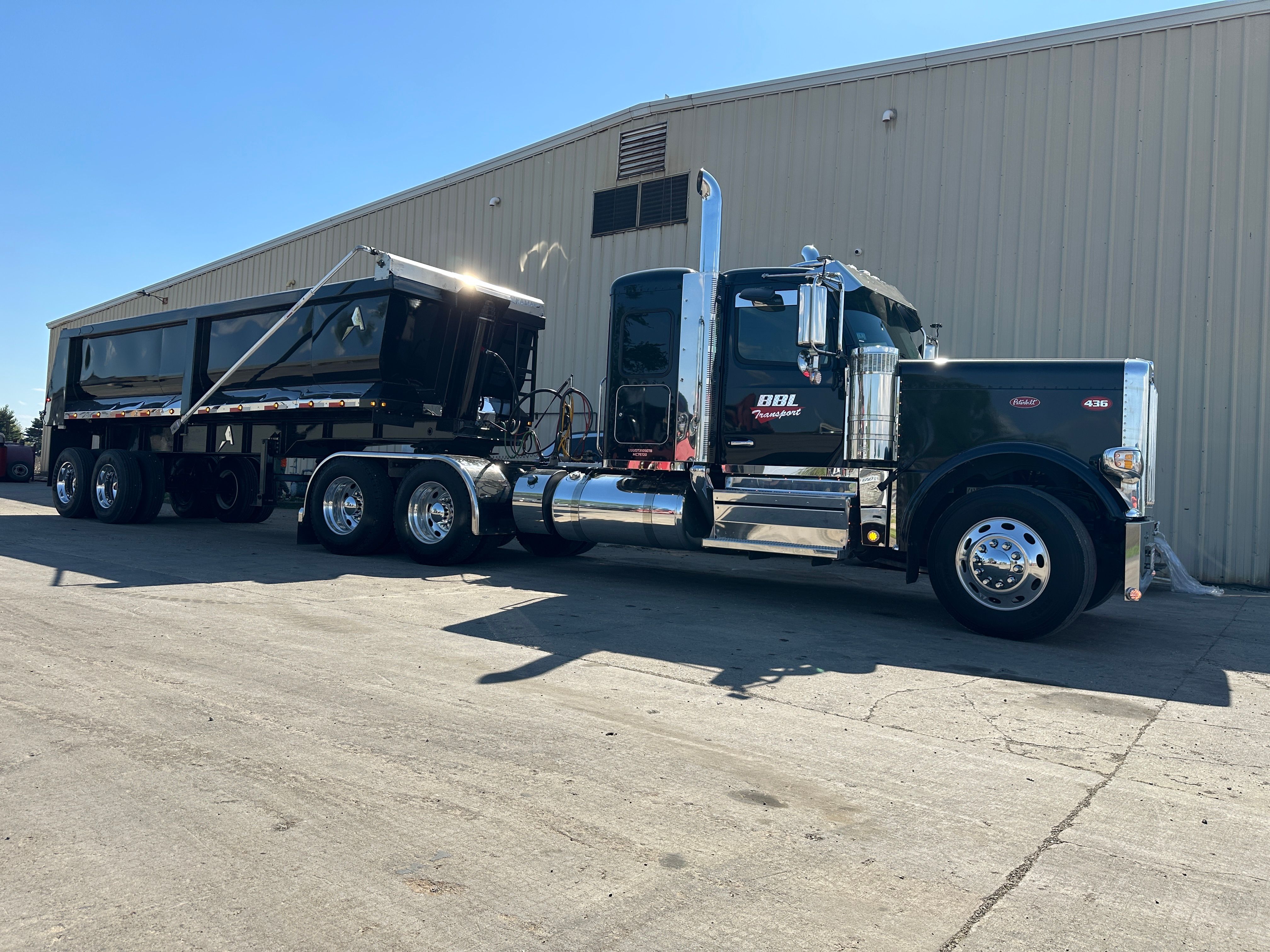
Barn Doors or Spreader Gate Which Dump Trailer Rear Gate Actually Fits Your Work
t
tj@civsav.com
© 2026 Civilized Savage
Based in USA
tj@civsav.com
Frame type, material, and payload capacity get most of the attention when shopping for a dump trailer, and rear gate style often gets treated as an afterthought despite directly determining how material actually leaves the trailer once you're ready to dump a load. The right gate choice depends heavily on what you're actually hauling and how you need that material to come out, and getting this decision wrong means fighting your equipment on every single load rather than working with it.
This guide covers the two main gate configurations available on dump trailers, what each one is actually built for, and how to match gate type to your specific hauling needs.
Barn door gates use two doors that swing open from a central hinge point, providing a full-width opening across the entire back of the trailer when material is ready to dump. This configuration allows material to exit quickly and in bulk, without the flow restriction a narrower opening would create. Barn doors work well when the goal is simply getting material out efficiently, without needing to control exactly how it spreads once it leaves the trailer.
A spreader gate uses an adjustable opening, typically controlled by a crank or hydraulic mechanism, that lets an operator control how wide the gate opens and, by extension, how much material flows out and how it spreads as the trailer moves forward during unloading. This design gives an operator real control over material placement, useful for tasks where an even, controlled spread matters more than simply dumping a full load in one place.
Barn doors suit situations where the goal is straightforward bulk unloading rather than controlled placement. Demolition debris, loose fill material being dumped into a pile, and general bulk hauling where material simply needs to come out quickly and completely all favor a barn door configuration. Our guide on common mistakes to avoid when buying a dump trailer touches on matching trailer features to actual use case, and gate type is a clear example of a decision that should be driven by your typical hauling work rather than personal preference or whatever configuration happened to be most readily available at purchase.
A spreader gate earns its value specifically in applications where controlled, even material distribution matters. Gravel and stone driveway work, where an even base layer needs to be laid down as the trailer moves rather than dumped in a single pile, is one of the clearest examples. Landscaping applications involving mulch, topsoil, or aggregate spreading across a defined area benefit significantly from this controlled release rather than requiring separate spreading equipment or manual labor after a bulk dump. Our guide on dump trailers for landscaping business productivity and profitability covers this application in more depth, and spreader gate capability is directly relevant to the kind of controlled material placement landscaping work frequently demands.
Beyond application, the physical characteristics of the material you typically haul affect which gate style performs better. Fine, flowing material like sand or gravel spreads predictably and controllably through a spreader gate. Bulkier, less uniform material, demolition debris or larger rock, tends to work better through a barn door's wider, unrestricted opening, where a narrower spreader gate opening could create blockages or uneven flow with irregular material.
Contractors hauling a genuinely mixed range of material types across different jobs should weigh which material type represents the majority of their actual hauling volume, since that primary use case should drive the gate decision even if some jobs would technically benefit from the other configuration.
Gate mechanisms require their own specific maintenance attention separate from general trailer upkeep. Barn door hinges and latches need periodic lubrication and inspection for wear, since these components see repeated opening and closing cycles under load and can develop play or stick over time if neglected. Spreader gate mechanisms, whether crank-operated or hydraulic, have more moving parts and adjustment points requiring their own inspection routine, checking for smooth operation across the gate's full adjustment range rather than just confirming it opens and closes at all.
Our trailer maintenance guide covers general upkeep practices worth applying across a dump trailer's various systems, and gate mechanisms deserve a specific place on that same maintenance checklist rather than being overlooked in favor of more visible components like the frame or hoist system.
Some dump trailers offer combination configurations, allowing an operator to convert between a full barn door opening and a controlled spreader function depending on the specific job. This flexibility comes at additional cost and mechanical complexity compared to a single dedicated gate type, but it can make sense for contractors whose work genuinely spans both bulk unloading and controlled spreading applications regularly enough to justify the added investment, rather than owning separate trailers or accepting compromise from a single-purpose gate that does not fit a meaningful portion of their actual work.
A few direct questions help clarify which gate type actually fits your operation. What percentage of your typical loads involve material that benefits from controlled, even spreading versus material that just needs to come out quickly and completely? Do you regularly haul both types of material in roughly equal measure, which might justify the added cost of a combination gate, or does one clearly dominate your typical workload? And how experienced is your typical operator with each gate mechanism, since a spreader gate's adjustable mechanism does carry a slightly steeper learning curve than a barn door's simpler swing-open design.
Answering these honestly before purchase, rather than defaulting to whatever gate type is most common or familiar, puts you in a much stronger position to choose equipment that actually fits how your business works day to day.
A few recurring mistakes show up when contractors select gate type without enough thought. Choosing a spreader gate primarily because it seems more advanced or versatile, without actually needing controlled material placement for typical jobs, adds unnecessary cost and mechanical complexity for a benefit rarely used in practice. Choosing barn doors purely out of familiarity, even for a business doing significant gravel or landscaping spread work that a spreader gate would handle far more efficiently, means accepting slower, less controlled unloading on a regular basis when a better-suited gate type was available from the start.
Underestimating how gate type affects daily workflow is a third common oversight. A mismatched gate does not just create a minor inconvenience; it adds real time and effort to every single load over the life of the trailer, a cost that compounds considerably across hundreds or thousands of loads compared to the relatively small upfront cost difference between gate configurations.
The right gate choice ultimately comes down to being honest about what your business actually hauls most often, rather than choosing based on which configuration seems more versatile in the abstract. Our guide on dump trailers for contractors and haulers covers how different hauling businesses have genuinely different equipment needs, and gate type deserves the same deliberate consideration given to frame type, material, and capacity when matching a trailer to your specific operation.
Both gate types carry their own operational safety considerations worth understanding before use. Barn doors, given their weight and the force involved in a full load pushing against them during dumping, require careful positioning and awareness of the swing radius when doors open. Spreader gates, with their adjustable mechanism under load, require operators to understand proper adjustment procedure rather than forcing the mechanism beyond its intended range. Our article on dump trailer load management, safety, and profitability covers broader safety principles worth applying to gate operation specifically, alongside the rest of a trailer's safe operating practices.
Gate type is not a minor detail to settle after the bigger decisions around frame, material, and capacity are already finalized. It directly determines how material actually leaves your trailer, and mismatching gate style to your typical hauling work means fighting your equipment on every load rather than working efficiently with it. Being honest about whether your business needs fast, full-width bulk unloading or controlled, even material spreading, and choosing gate configuration accordingly, is one more equipment decision worth the same careful consideration given to every other spec on the trailer. Getting it right from the start saves real time across every load the trailer ever hauls.