


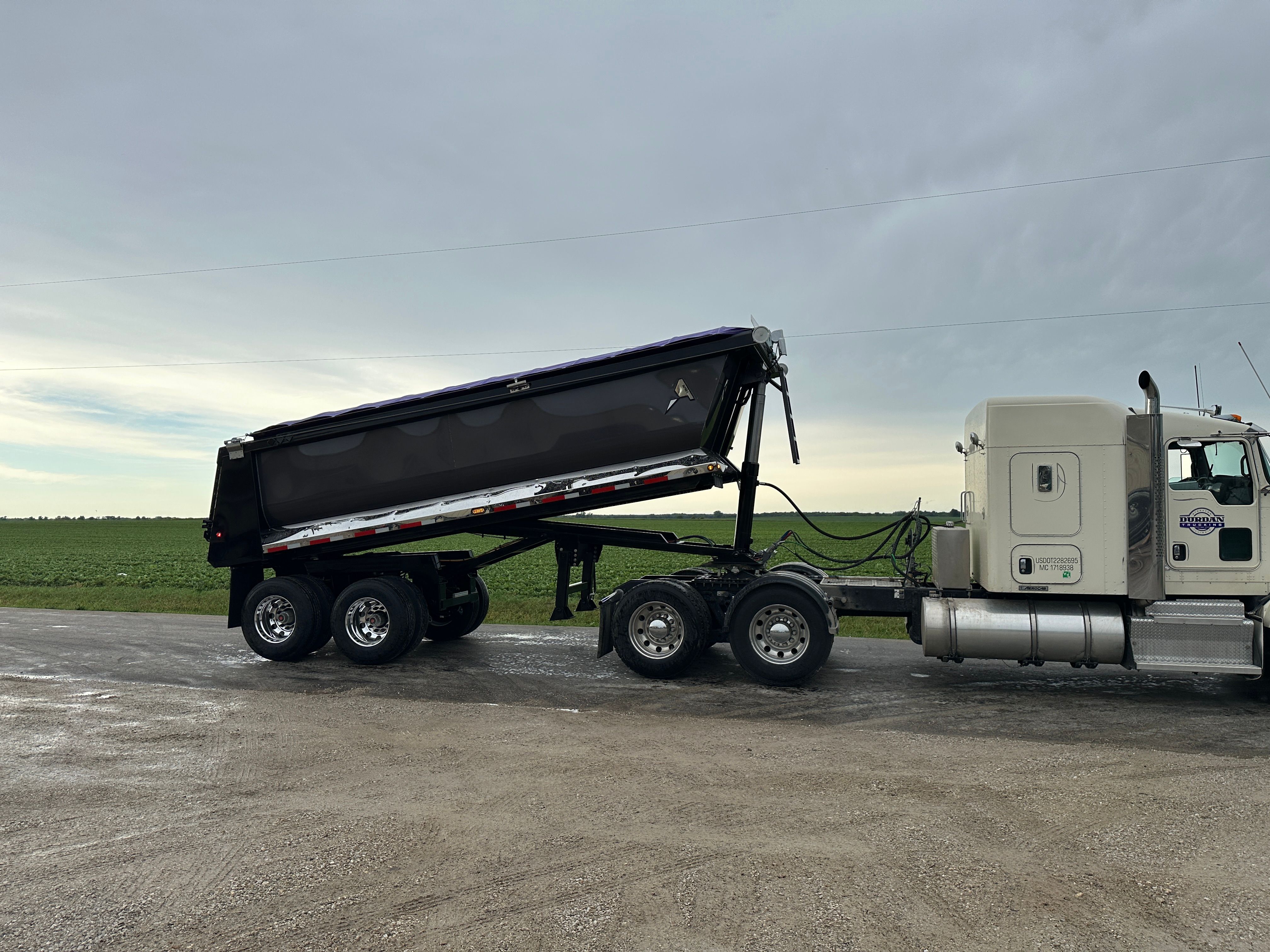
How Much Does a Dump Trailer Weigh Empty by Size and Type
t
tj@civsav.com
© 2026 Civilized Savage
Based in USA
tj@civsav.com
Empty weight, also called tare weight, is what a dump trailer weighs with nothing in the bed: no gravel, no mulch, no tools. If you want to know how much does a dump trailer weigh in your own case, the only reliable answer is the number on your trailer's data plate or a certified scale ticket, because weight changes with length, frame style, wall height, axle count, hoist type and options like tarps and spare tires. ALKO does not publish empty weights, GVWR or payload figures for its trailers on its website, so this article explains how weight works and how to measure yours rather than quoting pounds the company has not stated.
That distinction matters more than most buyers expect. Empty weight eats into what your truck can legally pull, and it also eats into what the trailer itself can legally carry. If you are still working out how much material you can load, our guide to payload capacity and weight distribution on dump trailers covers that side of the math in detail. Here we focus on the empty number and why it moves.
An empty dump trailer weighs whatever its own structure and hardware add up to. That includes the frame, the floor and sidewalls, the axles and suspension, the wheels and tires, the hoist and hydraulic pump, the battery box, the tailgate and any tarp system. Nothing you haul is counted.
Two trailers of the same length can still weigh noticeably different amounts. A quarter frame trailer built for daily hauling uses less structural steel than a full frame trailer built for demolition work. Taller sidewalls add material. A dual cylinder hoist weighs more than a single cylinder. Barn doors, spreader gates and electric tarps each add their own pounds.
This is why a generic average is risky to tow by. Treat any number you read online as a rough category, not as your trailer. The number that counts legally is the one on your scale ticket.
Length is the biggest single driver of dump trailer weight, but it never acts alone. Longer trailers need more frame steel, more floor and wall material, and usually more axles, which adds brakes, hubs, tires and suspension on top of the extra body weight.
ALKO does not publish empty weights by length, so the table below describes what changes as trailers get longer rather than assigning pound figures ALKO has not confirmed. Use it to understand the pattern, then get the actual number for the specific build you are considering.
| Size class | Typical setup | What drives the empty weight |
| Small bumper pull (about 10 to 12 ft) | Pulled behind a pickup on a ball hitch, lighter loads | Short frame, lower sidewalls, usually two axles and a single hoist |
| Mid size (about 14 to 16 ft) | Mixed contractor work, heavier bumper pull or gooseneck | More frame steel, taller walls, heavier axles and larger tires |
| Commercial (up to 26 ft and custom) | Pulled by a semi tractor for aggregate, paving and demolition | Long frame, multi stage hoist, heavy gate and tarp hardware |
ALKO's own FAQ offers sizing guidance rather than weights. It suggests 10 to 14 ft trailers for loads under 10,000 lb and 16 to 26 ft trailers for heavy commercial work, and it describes commercial GVWR ratings ranging from 10,000 lb to over 40,000 lb. Those are ALKO's stated figures for rated capacity, not empty weights, and they should be confirmed for any specific build. If you are still choosing a length, the guide to matching your truck to a dump trailer works through tow vehicle capacity alongside trailer size.
Aluminum is less dense than steel, so a given volume of it weighs roughly a third as much. Builders do not simply swap one for the other, because aluminum is softer, so sections are often made thicker or reinforced. Even after that, an aluminum body of the same size usually still comes out lighter than a steel one.
The trade is durability against weight. Steel takes abuse better when you are loading broken concrete, rebar or demolition debris. Aluminum resists rust and saves weight, which matters when you are near a legal axle limit and want more material per trip. ALKO states that its aluminum dump trailers are lighter and rust resistant with higher payload capacity, though it does not publish the figures behind that claim.
Remember that the body is only part of the trailer. Axles, tires, the hoist, the pump and the suspension are steel on both builds. That is why switching materials reduces empty weight but does not transform it.
These three numbers get mixed up constantly, and mixing them up is how people end up overweight at a scale house.
So a heavier trailer with the same GVWR carries less material. Add a steel tarp system and a spare tire, and you have just taken that weight out of your payload. Axle ratings matter too, since each axle has its own limit and a badly placed load can overload one axle while the total still looks fine.
Your truck has limits of its own, including a tow rating, a payload rating and a gross combination weight rating. The lowest limit in the chain is the one that governs. Our dump trailer towing safety guide walks through how those ratings interact on the road.
You have two reliable methods, and they answer slightly different questions.
Weigh the trailer the way you really run it, with the tarp, tools, chains, straps and spare tire on board. Those items are part of your working empty weight even though no spec sheet counts them. Reweigh after any major change, such as adding a heavier gate or a new tarp system.
There is no dependable average, because empty weight depends on length, frame type, wall height, axle count, hoist and options. A small bumper pull and a 26 ft commercial end dump are different machines. Use the data plate or a scale ticket for your specific trailer.
A small bumper pull trailer weighs less than a commercial unit because it has a shorter frame, lower sidewalls, lighter axles and a simpler hoist. Exact pounds still vary by builder and options, so confirm the figure with the manufacturer or weigh the trailer empty.
Yes. Enforcement weighs what crosses the scale, so your trailer's empty weight is part of the gross combination weight and part of each axle group reading. Heavier empty weight means less legal payload at the same rating. Check current limits with your state agency or FMCSA.
Look for the VIN sticker or data plate, usually on the driver side of the tongue or the front frame rail. It shows the GVWR and the rating for each axle. Some plates also list an unloaded or shipping weight from the factory.
Not always. Aluminum saves weight and resists rust, which helps when you run close to axle limits. Steel handles impact from concrete, rebar and demolition debris better. Choose based on the material you haul most and how often weight limits restrict your loads.
Reweigh after any change that adds or removes hardware, such as a new tarp system, a different gate, replacement axles or added toolboxes. Otherwise an empty baseline ticket and one loaded ticket per common material are usually enough for daily planning.
Knowing how much does a dump trailer weigh empty is the starting point for every legal load you haul. Get the empty number for your exact build, subtract it from the GVWR to find real payload, and compare that total against your truck's ratings. Then confirm it on a scale rather than trusting a figure from a forum.
ALKO Manufacturing builds heavy-duty steel and aluminum dump trailers in Varna, Illinois with American steel and local labor, and will give you the spec figures for the build you are considering. Call (815) 200 3816 or request a free quote at ALKO Dump Trailers.