


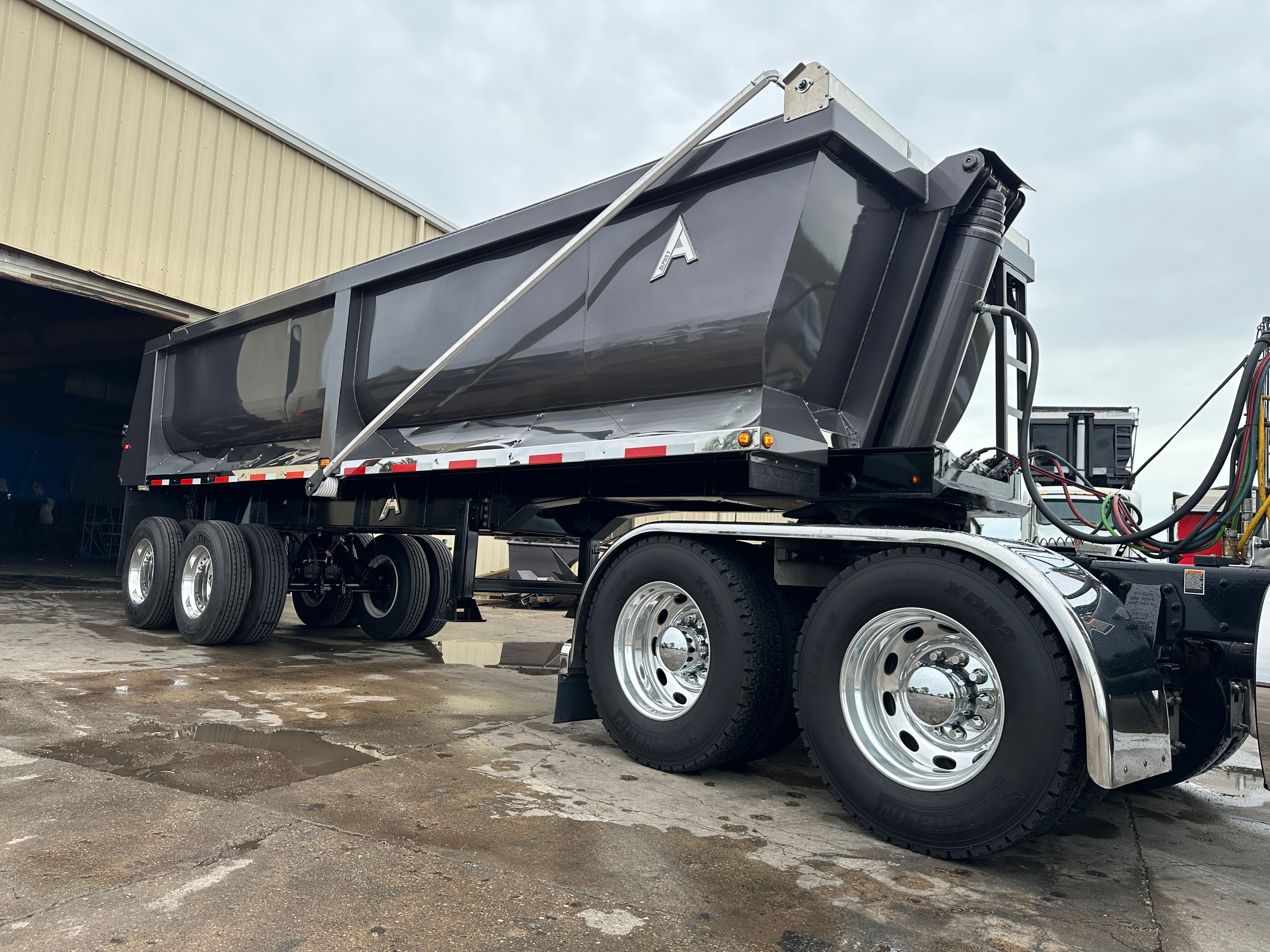
Quarter Frame Dump Trailers How the Frame Design Affects Performance
t
tj@civsav.com
© 2026 Civilized Savage
Based in USA
tj@civsav.com
Most buyers evaluating a dump trailer focus on payload capacity, material choice, and price, and rarely give much thought to frame geometry beyond assuming that a frame is a frame. Quarter frame construction is one of the more significant design differences between dump trailer models, and it directly affects dump angle, load stability, ground clearance, and how the trailer holds up structurally over years of heavy use. Understanding what a quarter frame actually is, and how it differs from other frame configurations, gives buyers a genuinely useful additional criterion when comparing trailers that otherwise look similar on paper.
A quarter frame dump trailer is built with the main frame rails positioned lower relative to the axles, creating a design where the hoist and pivot mechanism sit closer to the frame's lowest point rather than mounted higher on a straight, level main frame. This lower profile changes the trailer's center of gravity and affects how the bed tilts during the dumping cycle, generally allowing for a steeper dump angle at a given hoist stroke length compared to a standard straight frame design.
This is a meaningfully different engineering approach from the more common straight frame or drop frame configurations that many buyers are already familiar with, and the practical differences show up most clearly during actual dumping operation and in how the trailer sits and handles when loaded. Buyers comparing frame types for the first time benefit from understanding these mechanical differences at the level of actual jobsite performance rather than treating frame type as a minor spec sheet detail.
One of the clearest practical advantages of quarter frame construction is the dump angle it can achieve. A steeper dump angle clears material more completely from the bed, reducing the amount of material that has to be manually cleared after the hydraulic cycle completes, which matters considerably for sticky or cohesive materials like wet clay or certain aggregate mixes that tend to cling to a bed surface at shallower dump angles.
This efficiency advantage connects directly to the broader productivity considerations covered in our article on dump trailer efficiency and hauling productivity, where every minute saved per dump cycle across dozens of daily loads adds up to meaningful productivity gains over a full working season. Contractors hauling material types prone to sticking in the bed should weigh dump angle capability heavily when comparing trailer frame designs, since this single factor can noticeably affect daily cycle times on material-intensive jobs.
The lower frame profile that enables a quarter frame's steeper dump angle also affects ground clearance, which matters for contractors regularly hauling across rough, unimproved jobsite terrain rather than primarily on paved surfaces. A lower frame sits closer to the ground, which can mean reduced clearance over ruts, debris, and uneven ground compared to a higher-riding straight frame trailer, a tradeoff worth weighing honestly against the dumping efficiency benefits for contractors whose typical routes include significant off-road or rough-terrain hauling.
This ground clearance consideration connects to the broader suspension and handling factors covered in our article on how dump trailer suspension systems affect hauling performance, where frame geometry and suspension design work together to determine how a trailer actually performs across the range of terrain conditions a contractor's routes typically involve. Buyers evaluating quarter frame trailers specifically for rough-terrain use should confirm actual clearance specifications rather than assuming all quarter frame models offer identical ground clearance, since this varies meaningfully between manufacturers and specific model configurations.
Frame geometry affects more than dumping performance. It also plays a role in how the trailer distributes structural stress across its main rails during loading, transport, and the dumping cycle itself. A well-engineered quarter frame design distributes this stress effectively despite the lower profile, but the engineering quality behind a specific manufacturer's quarter frame construction varies, and buyers evaluating trailers for genuinely heavy-duty, high-cycle applications should look closely at frame material gauge and construction quality rather than assuming all quarter frame trailers are engineered to the same standard.
This connects to the broader material and construction considerations covered in our heavy-duty dump trailer guide, which addresses how frame construction quality affects long-term durability across demanding daily use. A contractor running a trailer through dozens of load and dump cycles per week places considerably more structural demand on the frame than a homeowner using a trailer occasionally, and frame design choices that work fine for light use can reveal weaknesses under sustained heavy-duty demand.
Neither quarter frame nor standard straight frame construction is universally superior. Each represents a different set of engineering tradeoffs suited to different priorities. Contractors whose primary concern is maximizing dump angle and clearing efficiency for sticky or high-volume material hauling often find quarter frame designs deliver a genuine operational advantage, while contractors prioritizing maximum ground clearance for rough-terrain work, or those hauling material types that clear easily regardless of dump angle, may find a standard frame configuration serves their needs just as well at a potentially lower cost.
The broader decision framework for evaluating dump trailer options based on actual use case rather than spec sheet comparison alone is covered in our guide on how to choose the right dump trailer for your needs, which remains a useful starting point before narrowing down to frame-specific considerations like the ones covered here.
Frame geometry also has a measurable effect on how a loaded trailer distributes weight across its axles and, by extension, how it tows behind the truck pulling it. A quarter frame's lower profile shifts the load's center of gravity relative to a standard frame trailer, which can produce different towing characteristics, particularly regarding sway and stability at highway speeds when the trailer is loaded near its rated capacity.
This is directly relevant to the towing safety considerations covered in our dump trailer towing safety guide and our guide on payload capacity and weight distribution for dump trailers, both of which address how proper load placement and weight distribution affect towing stability. Buyers switching from a standard frame trailer to a quarter frame model for the first time should take note of any handling differences during initial loaded towing, since the different center of gravity can change how the trailer feels behind the tow vehicle even when both trailers carry an identical rated payload.
The lower frame profile and hoist mounting position common to quarter frame trailers can affect accessibility for certain maintenance tasks, including hydraulic cylinder inspection and undercarriage cleaning, compared to a higher-riding standard frame design. Contractors purchasing a quarter frame trailer should factor this into their maintenance routine planning, since a component that is easy to access and inspect on one frame design may require more effort to reach on another.
The general maintenance framework covered in our trailer maintenance guide applies to quarter frame trailers the same way it applies to any dump trailer, but owners should ask their dealer specifically about any frame-design-related maintenance considerations unique to the quarter frame model they are considering, particularly around hydraulic system access and undercarriage debris buildup given the lower ground clearance these designs typically carry.
Frame geometry does not operate in isolation from the material a trailer is built from, and the tradeoffs discussed throughout this article play out somewhat differently depending on whether a quarter frame trailer is constructed from steel or aluminum. Steel's greater mass and rigidity can offset some of the structural concerns that come with a lower-profile frame design, while aluminum's lighter weight improves towing efficiency but places different demands on frame engineering to maintain structural integrity through repeated dump cycles.
Buyers weighing a quarter frame purchase should review the broader material comparison covered in our article on steel versus aluminum dump trailers and which material is right for your operation alongside the frame geometry considerations discussed here, since the combination of frame design and material construction together determines how a specific trailer model will actually perform, rather than either factor alone telling the full story.
Contractors operating multiple dump trailers across a fleet face an additional consideration when evaluating quarter frame options: whether standardizing on a single frame type across the fleet simplifies operator training, maintenance planning, and parts inventory compared to running a mixed fleet of frame designs suited to different job types. There is a reasonable case for both approaches, and the right answer depends on how varied a contractor's typical project mix actually is.
This decision connects to the broader fleet strategy considerations covered in our article on dump trailer fleet strategy for profitability and efficiency, where equipment standardization decisions should be weighed against the operational flexibility that comes from matching specific trailer designs to specific project types. A contractor with highly varied material types and site conditions across their project portfolio may benefit more from a mixed fleet than one running a narrower, more consistent range of work where standardization offers clearer operational simplicity.
Choosing between quarter frame and standard frame dump trailers ultimately comes down to matching frame geometry to the specific material types, terrain conditions, and duty cycle a contractor's operation actually demands. Buyers who take the time to evaluate this alongside the more commonly discussed factors of material, size, and payload capacity end up with a trailer that performs well not just on paper, but in the actual daily conditions it will operate under for years of service.